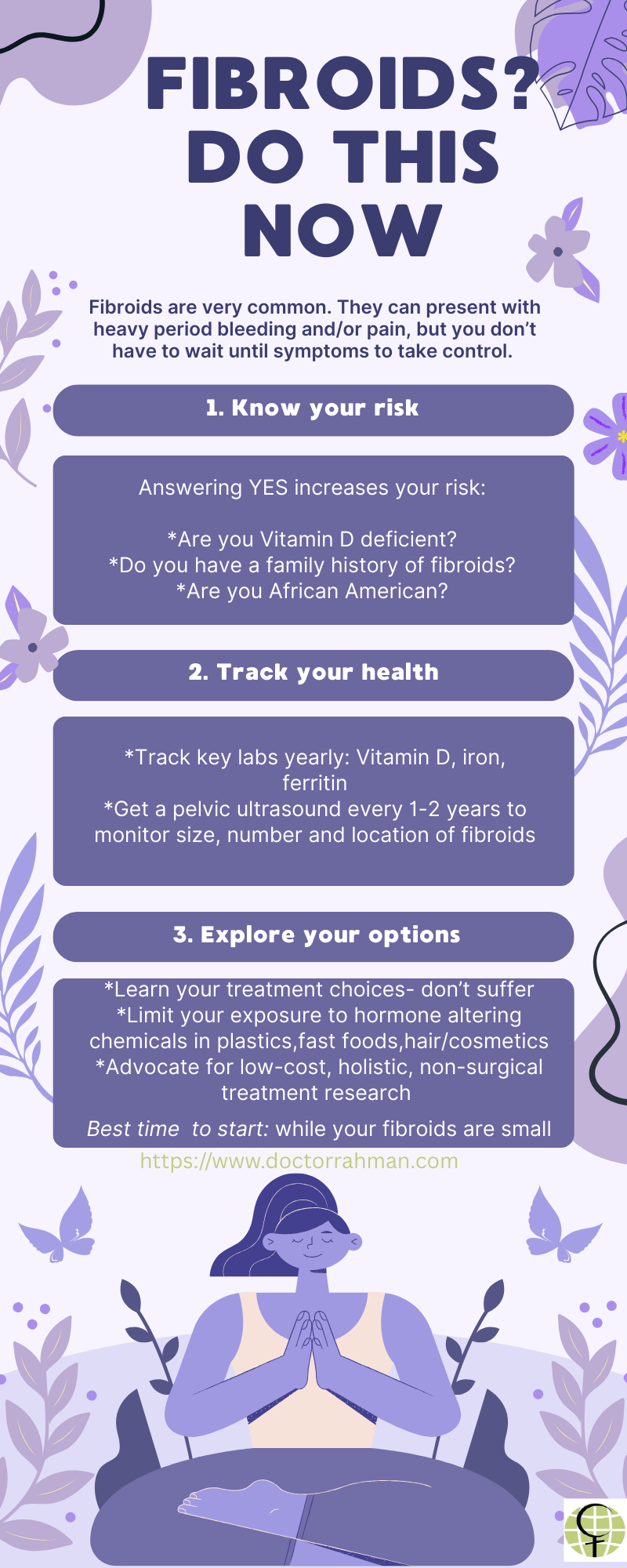
Fibroids affect millions of women - and Black women face the highest risk - yet most don't know you can take action before symptoms start. If you're African American, Vitamin D deficient or have a family history of fibroids, your chances for developing fibroids are higher. The good news? You can monitor your health and your fibroid risk yearly with key labs (Vitamin D, iron, ferritin), regular pelvic ultrasounds, and reducing your exposure to endocrine-disruptive chemicals (EDCs) in foods, plastics and beauty/hair products. These steps can help to reduce symptoms and potentially give you more treatment options should fibroids develop.

Am I Truly Invisible? How Treatment Limitations and Research Priorities Shaped Fibroid Care
Fibroids are among the most common conditions affecting women of reproductive age.They are routinely diagnosed and widely recognized within gynecology.Yet many women — particularly Black women, who bear a disproportionate burden — de…

Vitamin D & Fibroids: What Every Woman Should Know”
Fibroids are incredibly common, and while women of all backgrounds experience them, Black women often experience them earlier, bigger, and with more symptoms. Many women quietly suffer through heavy bleeding, fatigue, anemia, pain, or fertility stru…
 Apple Podcasts
 Spotify
 Castro
 RSS Feed